
Philippi Festival
The Philippi Festival is the second longest-running cultural institution in Greece, after the Athens and Epidaurus Festival.
HISTORICAL REVIEW
The decision to launch it, prompted by the reopening of the Ancient Theater of Philippi after twenty-four centuries of silence, was taken in early 1957. The first show took place on September 8, 1957, marking the reconnection of the monument with live theater.
Despite a significant lack of financial resources, Professor Lazaridis enlisted the help of military and local forces in the area, which contributed decisively to the initial restoration work. The systematic excavation of the cavea revealed the first marble rows of seats, while temporary structures allowed for the accommodation of approximately 6,000 spectators from the very first period of the theater’s operation.
The pattern of active mobilization of the local community, in collaboration with state agencies, was decisive for the early years of the institution, ensuring its sustainability and hosting important shows of ancient drama and contemporary theater.
In 1961, with the establishment of the State Theater of Northern Greece, the Philippi-Thasos Festival entered a new phase. The NTNG inaugurated its operation by presenting “Oedipus Tyrannus” as part of the official events of the Festival on August 19, 1961. In the years that followed, the Festival hosted important productions not only by the State Theater of Northern Greece, but also by the National Theater, the Karolos Koun Art Theater, and other leading theatrical organizations.
In 1984, the Municipality of Kavala took over the organization of the Festival, while in 2000, responsibility for its organization was transferred to the Municipal Regional Theater of Kavala.
Since then, the Festival has been running continuously, hosting the most important productions of Greek (and not only) theater every year, constituting a constant point of reference for ancient drama and contemporary theatrical creation.
NEW ERA
Since 2009, the Philippi Festival has changed its character and now includes in its program, in addition to guest shows, its own original productions mainly related to theater, dance, music, and show. The Festival has now acquired its own rhythm and vision; it commissions, produces, and creates.
The Ancient Theater of Philippi is no longer the only venue for shows. Activities are spread throughout the city of Kavala: the Fortress, Imaret, the Old Music Hall, the Gardens of Mehmet Ali, as well as schools, churches, traditional coffee houses, buses, and ships, giving new meaning to the concept of site-specific shows.
The aim of the Festival is now to serve not only its historical legacy, but also contemporary artistic creation. As part of its strategy to upgrade to a European-level institution, its activities are developed both in the ruins of the ancient and Byzantine city of Philippi and in characteristic buildings and sites in Kavala — a city with a strong historical identity, linked to the tobacco trade and shipping, where the memories of a thriving civilization are still visible.
As part of its ongoing development, starting in 2025, the Festival has installed a subtitling system, effectively reinforcing its international and inclusive character. The shows are now accessible to viewers of different nationalities, while at the same time facilitating the participation of vulnerable social groups, such as people with hearing difficulties. At the same time, the conditions are being created for hosting foreign producers and forging stronger links with contemporary international artistic trends.
LABORATORY OF ANCIENT DRAMA
Since 2017, the Philippi Festival has included in its activities the Ancient Drama Workshop, which takes place in the wider archaeological site of Philippi. This workshop is organized by the Municipal Regional Theater of Kavala and is held under the auspices and with the support of the Ministry of Culture. Together with other institutions (National Theater, KTHB, Athens-Epidaurus Festival, etc.), it forms the International Network of Ancient Drama, a network of important organizations active in some of the most significant ancient theaters in the country.
It is an original research and creation workshop that functions as an intensive summer school for young artists. Through an open call for participants and an invitation to renowned teachers, working groups are formed to explore, experiment, and present new approaches to ancient drama in a show open to the public.
By participating in the program, participants gain specialized knowledge of ancient drama, while also having the opportunity to try out and be tested on new methods, showcasing their work in one of the most important ancient theaters in the country.
NEW GOALS
In recent years, the objectives of the Philippi Festival have been renewed, enriched, and expanded. Greater emphasis is placed on its original productions, which set it apart from other festivals in the country, creating its own unique identity, and on the extroversion that a festival of this size and history must have, while also developing a multi-thematic character that is not exclusively theatrical.
Pan-Hellenic premieres, tributes to important writers of the country, activities specially designed for children, shows on buses and ferry boats, teenage shows created by teenagers themselves, shows with the participation of senior citizens, commissions to established and emerging directors, new texts inspired by current events (queerness and gender identity, ecological disasters, identity issues, etc.) are just some of the activities that have shaped the rich program of recent years.
NEW PERSPECTIVES
SUBTITLES
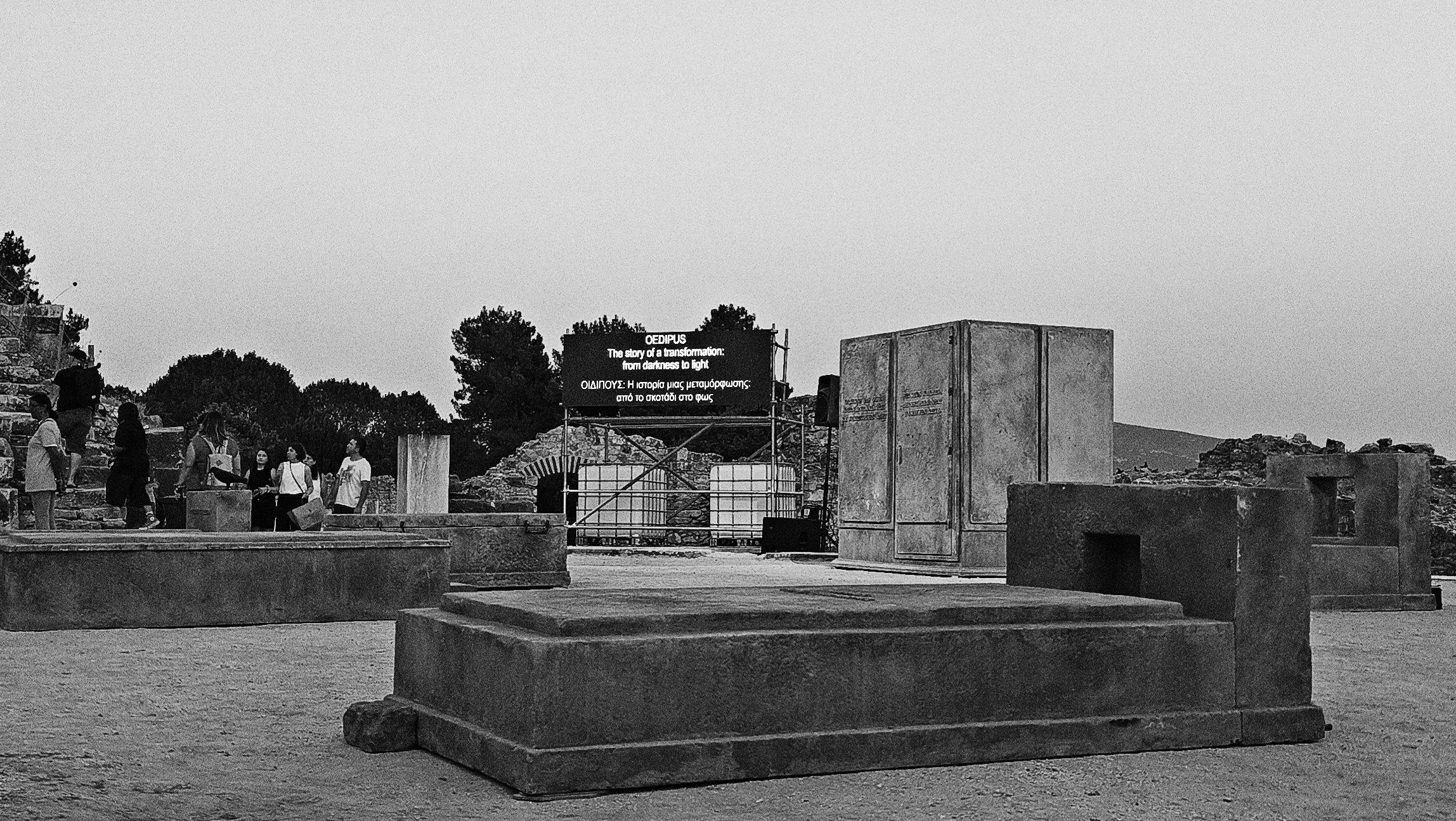
With the installation of a subtitling screen, which took place for the first time in the summer of 2025, the Philippi Festival has managed to become accessible to the thousands of visitors who flock to the wider Philippi area during the summer months, while also ensuring a complete viewing experience for people with hearing impairments. At the same time, this choice opens up new horizons for the festival, as it now allows it to host important shows from abroad, thus confirming its international character.
Collaborations - Synergies
One of the priorities of the Philippi Festival has been, from the outset, to engage in co-productions with other important theatrical organizations both within Greece and abroad. Its participation in the European festival network EFFEA has already secured additional funding and enabled one of the original productions of the Kavala Municipal and Regional Theater, which organizes the Philippi Festival, to travel to Italy and Portugal, while other productions, distinguished for their high quality and aesthetics, have been included in the programs of other festivals and theater organizations in the country since their premiere.
"THE PHILIPPOS FESTIVAL TRAVELS TO THE NATIONAL OPERA OF GREECE"
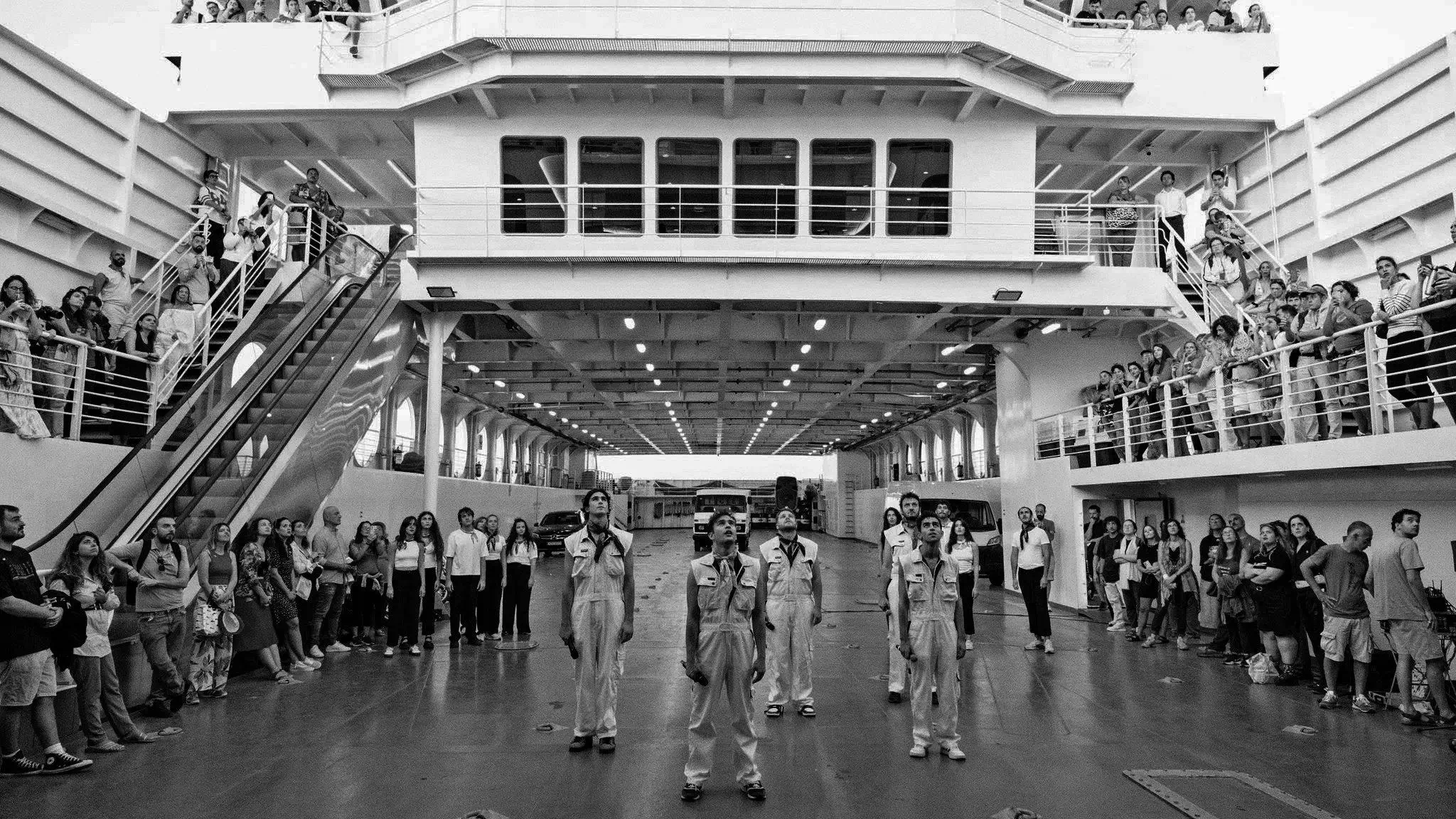
Perhaps the most important step taken by the Philippi Festival in this direction so far has been its collaboration with the Greek National Opera in 2025. Following the signing of the relevant cooperation protocol between the Municipal Regional Theater of Kavala and the National Opera, the latest productions of the Philippi Festival were presented in September 2025, in the background of the GNO (three of them), while the fourth, which had been designed as a show at sea, was presented on the Piraeus-Aegina-Piraeus route. The public response was overwhelming, and as the whole venture was crowned with remarkable success, efforts are being made to establish this event on an annual basis, so that every September, the original productions of the Philippi Festival (DIPETE Kavala) can be presented on stage and under the auspices of one of the most important cultural organizations in the country.