
DESCRIPTION
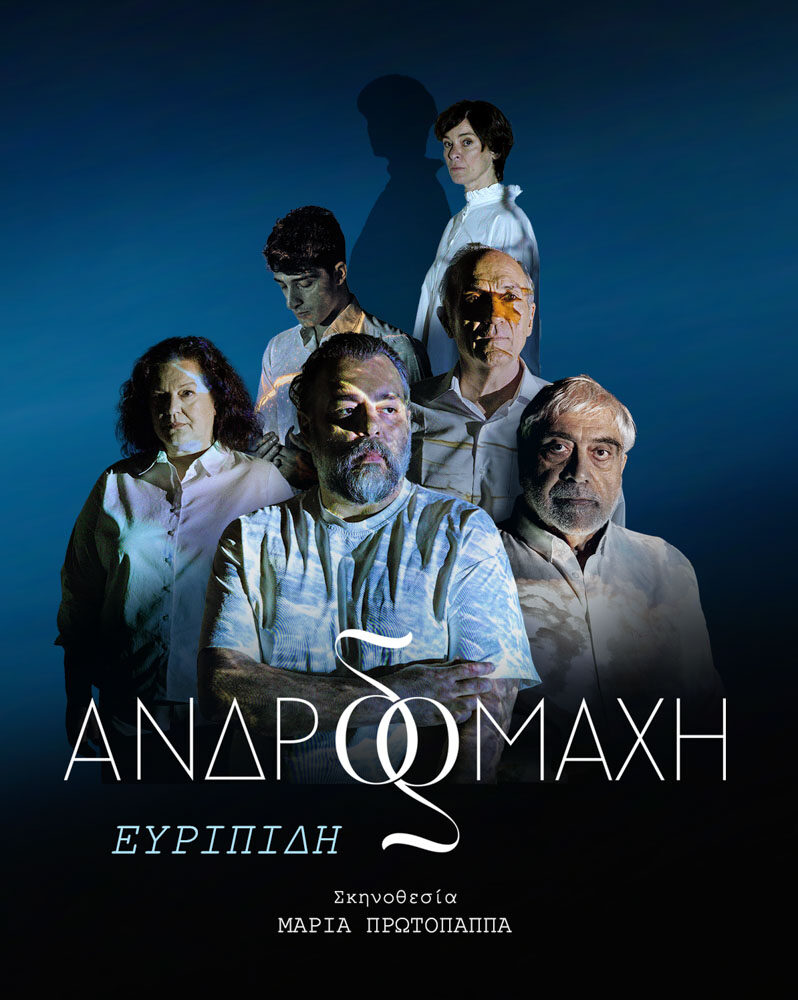
Euripides’ “Andromache,” directed by Maria Protopappa, a tragedy that remains surprisingly relevant, exploring experiences of terror and destruction, individual choices, and their profound influence on society, will be presented on Saturday, August 30, and Sunday, August 31, at 9 p.m. at the Ancient Theater of Philippi, as part of the 68th Philippi Festival.
Based on the translation by G. V. Tsokopoulos, the great director and actress dramaturgically and directorially adapts a play that raises crucial questions and, with her characteristic dynamism, takes on the role of the Woman.
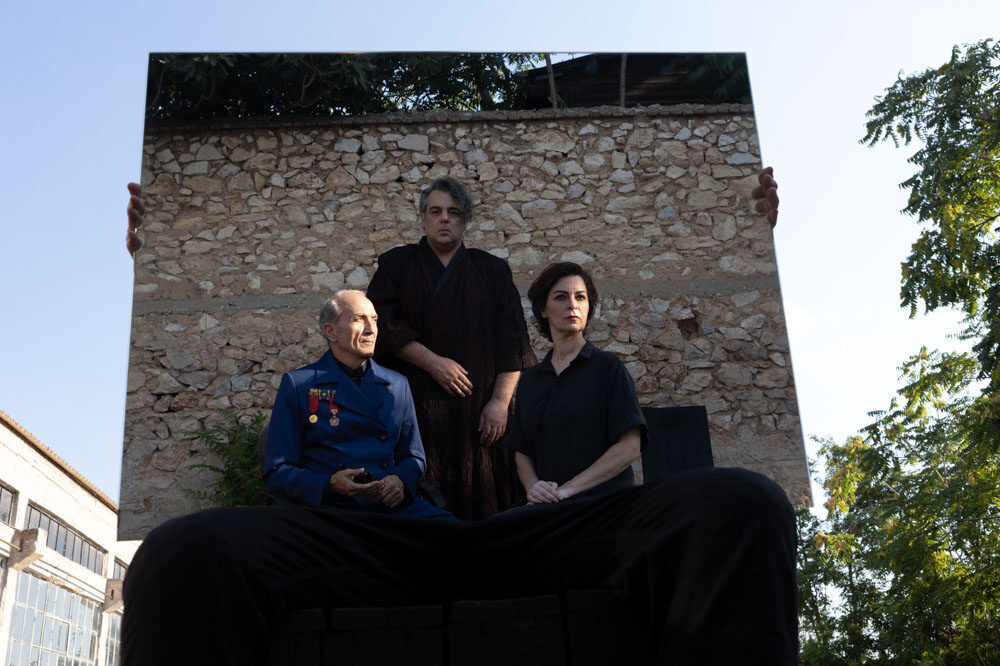
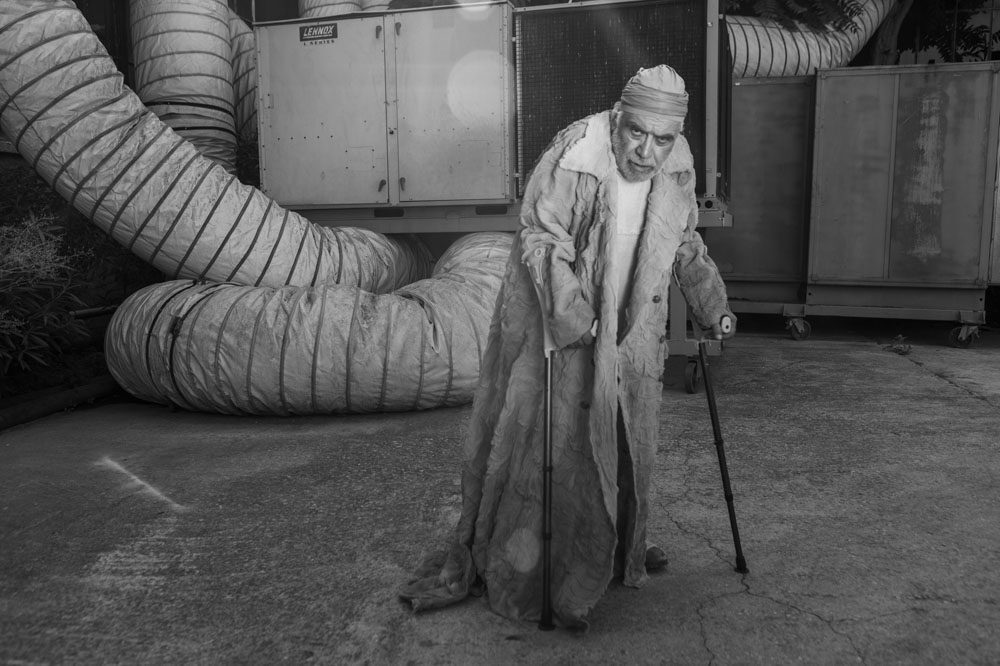
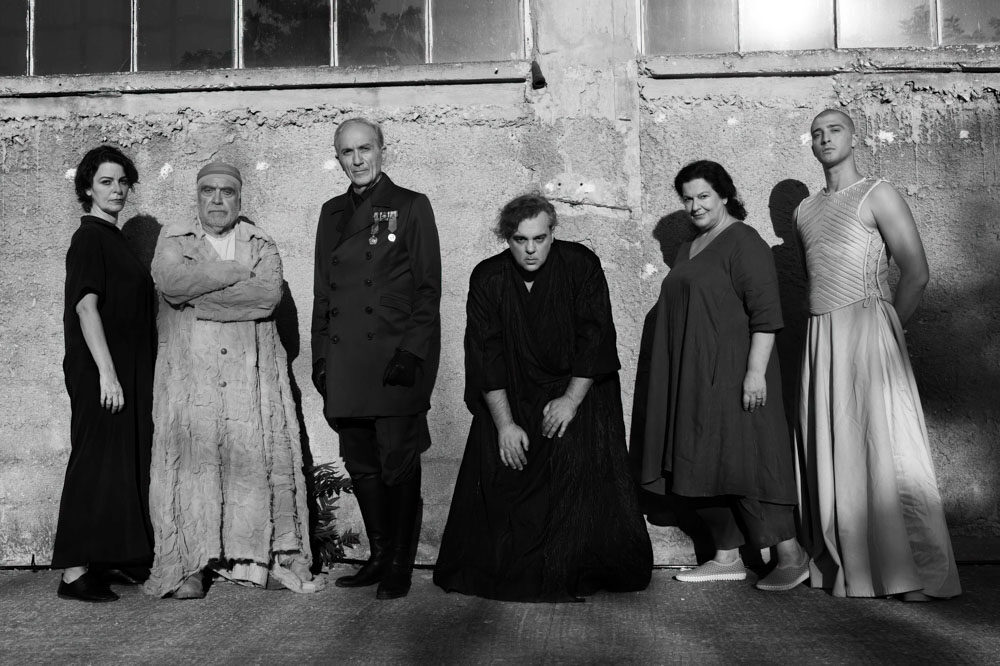
A unique ensemble cast plays the roles of the other tragic characters: Argyris Xafis plays Andromache, Tasos Lekkas plays Hermione, Giannis Dalianis plays Menelaus, and Dimitris Piatas plays Peleus. Stella Gika plays the role of Thetis, while Dimitris Georgiadis, Dimitris Mamio, Konstantinos Passas, Giorgos Fasoulas, Giannis Manthos, and Nontas Damopoulos play the chorus.
The tragedy of Euripides
We are transported far from the big cities, to the Greek countryside. Thessaly, Phthiotis, Thetis. To the home of Achilles’ son, Neoptolemus. There we witness the dramatic conflict between two women: Andromache, widow of Hector and slave of Neoptolemus, and Hermione, wife of Neoptolemus. Hercule, full of jealousy and envy, accuses Andromache of being the reason why Neoptolemus no longer loves her and does not want to have children with her, even though he already has a child with Andromache. The conflict reaches its peak when Menelaus, the king of Sparta and Hermione’s father, decides to kill Andromache’s child, thus carrying out one of the most extreme acts of revenge and arrogance.
Neoptolemus, the violent, cruel, irreverent hero of the Iliad, upon whom the victory of the Greeks at Troy depended, is incapable of fulfilling his responsibilities as a father, husband, and leader. He leaves to seek healing at the Oracle of Apollo at Delphi. His warlike frenzy has contaminated his bed, his home, his city. Before the eyes of the woman he has irreparably wronged, he will receive the kind of punishment known as Neoptolemus’s Tisys.
In a reversal of the heroic Iliad, Euripides undermines the arrogance of the Greeks and the illusion of the superiority of their civilization. The pre-war promises of a united, powerful country are disproved in a landscape of decay, old age, fear, and envy.
The responsibility lies not only with the instigators, but also with those who believed them and contributed to the decline of values through their tolerance. The new generation is paying the price. The decimated country is represented by a grotesque dance of women, abandoned, frightened, subjugated in their confusion.
The performance
Women in ancient art, from sculpture and painting to poetry, are often depicted as symbols of their countries, protecting their homelands like a mother protects her children. Male figures, on the other hand, take on strategic management and leadership roles.
In Maria Protopappa’s dramatic and directorial approach to “Andromache,” Hermione and Andromache represent the ideals of their countries, while Menelaus and Peleus represent politics and power. The women are not simply female characters; they have been constructed by men to represent the ideal role of the country and society. Thus, while Euripides’ tragedy speaks of a household, it essentially deals with the ethos and political management of a state in times of peace.
Euripides’ language breaks the rules of the time and transforms into spells that vibrate with physicality, sensory memory, and collective experiences. The director attempts to bring these precious and untranslatable elements to light and convey them not only verbally, but also through movement, with the help of an exceptional team of Greek actors.
Note by Maria Protopappa
“A woman captured in war and her child, born of rape, become the cause of scandal in a small provincial town. Andromache’s determination to survive, full of hope and expectations for the future, her courage to resist and denounce the injustice she suffers, upsets the local elite, closes homes, breaks alliances, and exposes the inequalities of society.
In the most intense way, Euripides highlights the arrogance of the powerful, the illusion of superiority of the “civilized” Greeks over the “savage” barbarians, revealing the fundamental injustices of their world.
Andromache becomes a symbol of resistance against social and political injustice. She is a woman who, despite the mistreatment and oppression she suffers, refuses to submit and remain silent. Her actions, her persistence, and her voice dynamite the establishment and overturn powerful social structures. The overturning of expectations, the breaking of taboos, and the denunciation of the incorrigible evil that comes from power become the driving force that changes the balance and brings Nemesis to the heart of society.
Revealing the moral poverty of power, Euripides does not remain on the surface, but digs deeper, observing how corruption and violence return against those responsible, acting as a natural, divine intervention. When human justice fails, Nemesis takes action, restoring balance and a woman’s right to claim her place in the world, regardless of social prejudices.
In “Andromache,” the insistence on justice, the need for recognition, and the acknowledgment of truth transcend social conventions, revealing the gaps in power and its arrogance. Through the voice of Andromache, Euripides invites us to recognize the true value of the human spirit, endurance, strength, and justice, which are always superior to the interests and contradictions of the powerful.
*No admission to the theater after the performance has begun.
**For another year, spectators will be able to travel by KTEL Kavala bus to and from the ancient theater of Philippi upon presentation of their ticket for the respective theatrical performance and a special fare of €4.00.
Departure from Kavala Bus Station at 6:45 p.m. and return after the end of the performance.
Note: Holders of nominal invitations to the 68th Philippi Festival are requested to declare their intention to use them by Thursday, August 28, while identity checks will be carried out at the theater entrance on the day of the performance.
For further information, please call the Kavala Municipal Regional Theater at 2510. 220876 (10:00 a.m. – 2:00 p.m.).