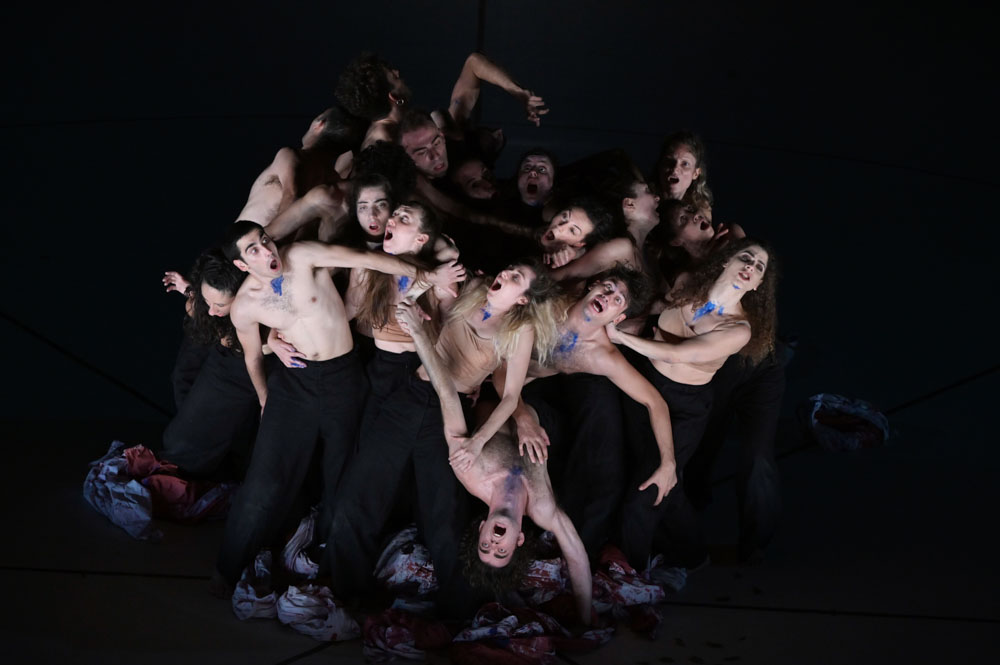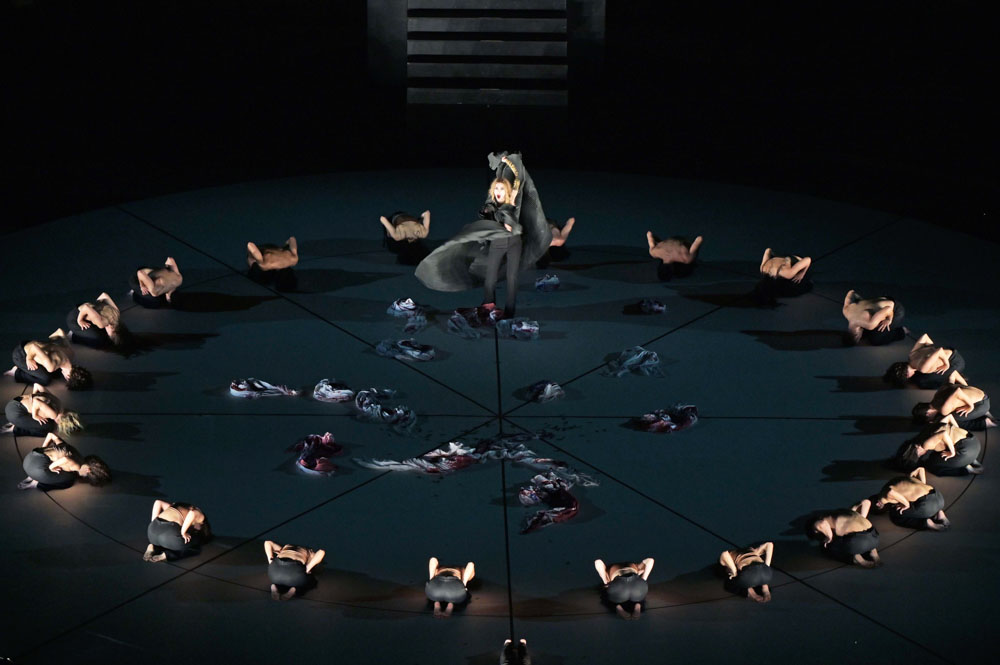

For Oresteia
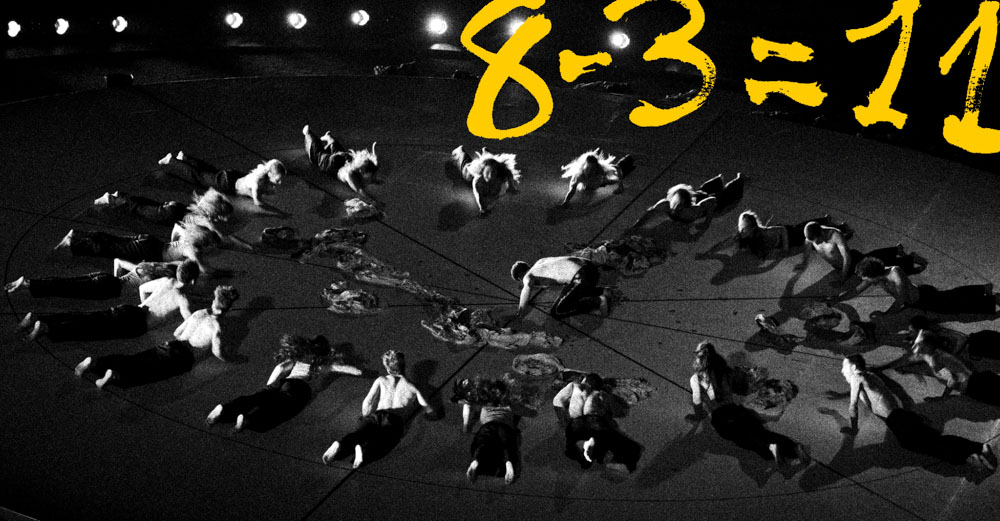
In 458 BC, at a time of violent social and political upheaval, Aeschylus presented the Oresteia (Agamemnon, The Libation Bearers, Eumenides), the only surviving trilogy of ancient drama and his last surviving work, which he completed just two years before his death, reflecting many of the rapid changes of his time.
The central theme of the trilogy is the tragic course of the Atreides family, the curse of blood that spreads to all the characters in the drama and the chorus through successive stages, leading from destabilization to deadlock. Athena exploits this situation to establish a controversial peace.
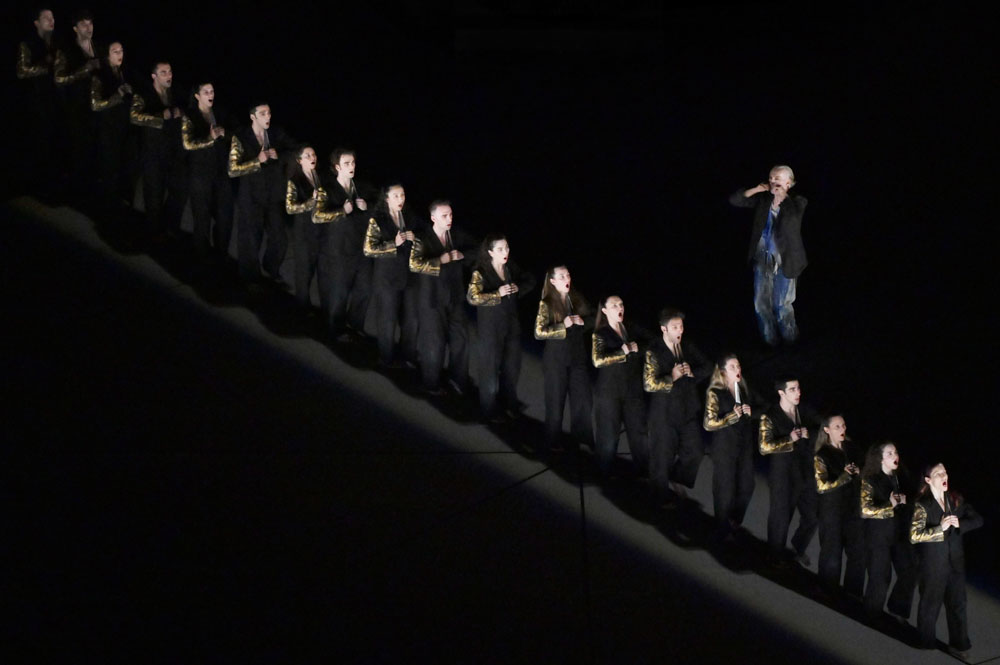
In the first two parts of the trilogy, Agamemnon and The Libation Bearers, the murders that put an end to the tyrannical rule of Agamemnon and Clytemnestra, respectively, are the culmination of a new period of crisis and destabilization that is reflected in the Eumenides. The Furies, the chthonic deities, representing instincts and impulses, preserve memory. Knowing that any conflict with the gods is a foregone defeat, they revolt and threaten the order of the city. Orestes must pay to punish not only the crime, but also its repetition, and to keep the memory of the conflict alive.
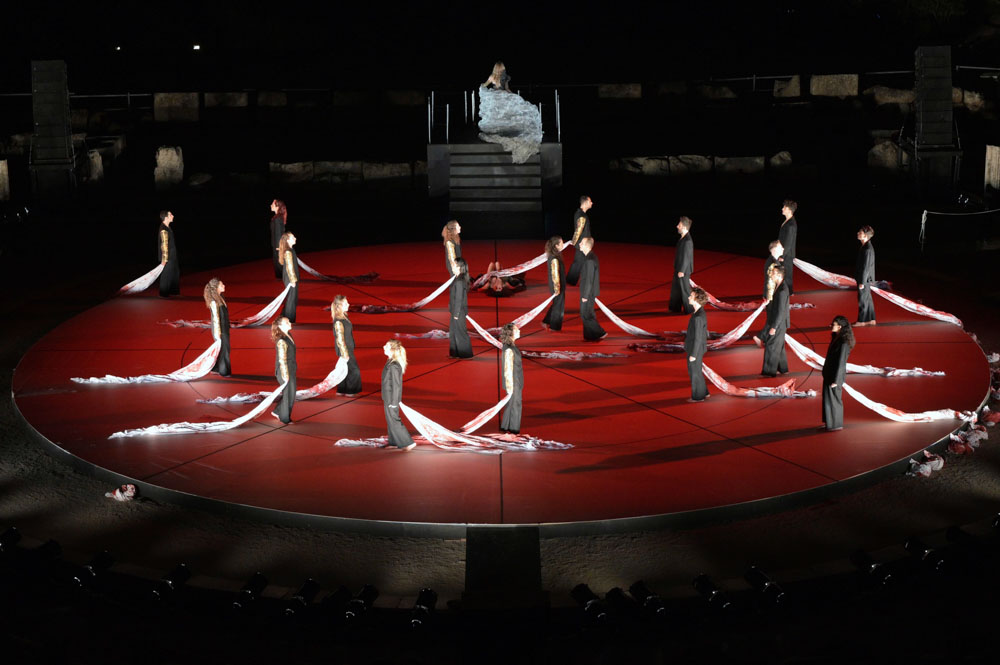
Athena tries at all costs to conclude a “peace agreement” between the gods and the Furies, offering concessions and privileges. To achieve the truce, she transfers violence to the realm of language. Her speech introduces deceitful persuasion, lies, and misdirection into the political sphere. The Furies submit of their own free will. Wearing the characteristic purple robes of the metics, they are proclaimed Eumenides and removed from the heart of the city. They are led into obscurity, into oblivion, into the bowels of the earth. The democratic regime has been established. But not without pain. Everything that is incompatible with the new regime—the part of the living body connected to memory, instincts, and animal instincts—has been exiled. The new order is imposed by the mechanisms of power in such a way that these vital forces seem as if they never existed.
The Erinyes compromise and accept the social position of the metics, but their internal structure remains unchanged. Like natural phenomena that do not disappear from the earth but follow a spiral path of transformation, escalation, and de-escalation, so we can imagine the chthonic deities retreating and withdrawing, only to re-emerge, constantly taking on new, unexpected forms.
Director’s note
Why does the Oresteia continue to exert such a terrifying attraction? One possible answer could be that humans have a need for a deeper connection with Myth. The myth of Oresteia is dangerous, it belongs to the world of the unknown and the strange, it provokes terror because it reveals the unruly, the violent, and the laws of the depths that cannot be tamed. Clytemnestra invites us to break the mirror together, so that a new nightmarish image may be born from its fragments, one that will nevertheless retain the dark roots of the myth.
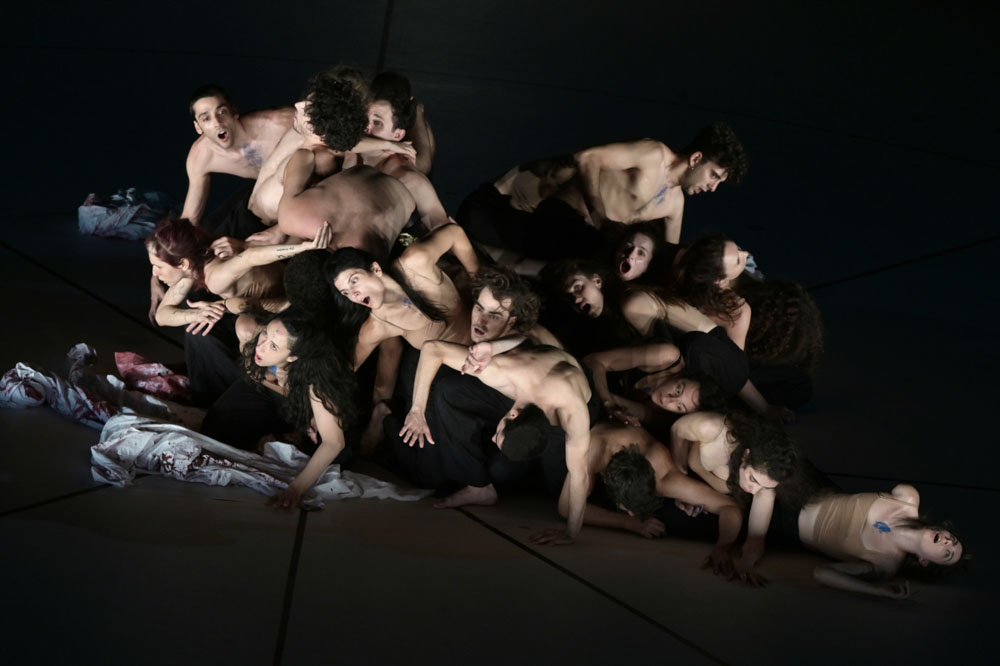
Our intention is to study the depth of the myth of Oresteia and to search for the unpredictable, the unusual, the paradoxical. The characters offer their bodies on the altar of the unknown, posing constant questions and dilemmas. The aesthetics of the performance arise from the dynamic relationship between the Body and Myth, Time, and Memory. We pose once again the fundamental ontological question “what is it about?”, a question that does not allow for definitive answers, but constantly drives us towards an ever deeper exploration of the root of sound, of the word, of the multiple dimensions of the human enigma and the reconstruction of a new Myth.
Theodoros Terzopoulos
The Oresteia by the National Theater
The Oresteia has been presented by the National Theater at Epidaurus five times to date: in 1954 and 1959, directed by Dimitris Rontiris; in 1972, directed by Takis Mouzenidis; in 2001 directed by Yannis Kokkos, and in 2019 with Io Voulgaraki, Lilly Meleme, and Georgia Mavragani, who directed the plays Agamemnon, Choephoroi, and Eumenides, respectively, in their first directorial appearances at Epidaurus.
Pre-sale
Kavala: Kavala Municipality Visitor Information Center (formerly EOT) Central Square, tel: 2510-620566, daily from 10:00 to 14:00 and from 18:00 to 21:00, while on the day of the performance, advance sales will take place at the ticket office of the Ancient Theater of Philippi from 19:00 in the evening.
Krinides: Café “Proskino,” Ancient Theater of Philippi, tel. 2510516090
*No admission to the theater after the performance has begun.
**For another year, spectators will be able to travel by KTEL Kavala bus to and from the ancient theater of Philippi upon presentation of their ticket for the respective theatrical performance and a special fare of €4.00.
Departure from Kavala Bus Station at 6:30 p.m. and return after the end of the performance.
Note: Holders of nominal invitations to the 68th Philippi Festival are requested to declare their intention to use them by Monday, July 31, while identity checks will be carried out at the theater entrance on the day of the performance.
For further information, please call the Kavala Municipal Regional Theater at 2510. 220876 (10:00 a.m. – 2:00 p.m.).